It is these old houses of Berlin; I am welcomed into them one after the other.
They are all otherworldly to me; most of my years I have spent in Sweden and only now, maybe, do I fully understand what it means to live in a prosperous economy.
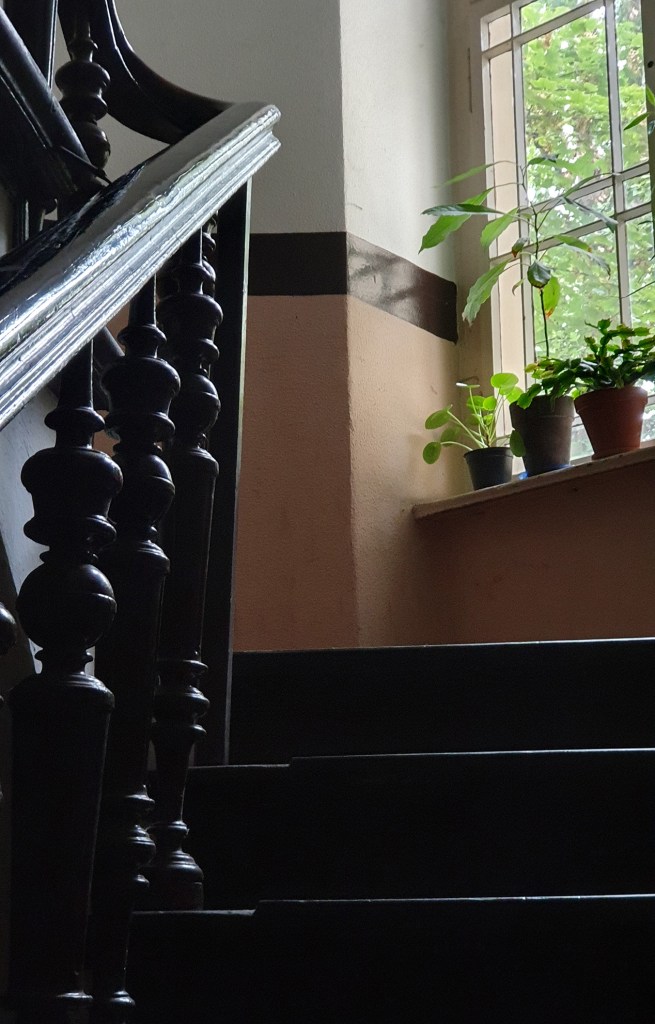
It is the materials of these old houses of Berlin; the stairs are not stone, they are wood and linoleum or maybe other materials, thin and hollow. They are creaking and buckling. The handlebars are not metal but wooden, beautiful and winding, painted with a thick layer of acrylics and sometimes missing a spoke or two, sometimes rocking as I grip them for support making me retract my bodyweight right away; not trusting them too much.
The plaster on the walls is sometimes cracking, sometimes plainly coming off, leaving big holes where other textures surface.
Sometimes there is graffiti and doodles, sometimes, outside of the silent apartment doors, people have placed their stuff: pieces of wood, buckets of paint, doormats and shoes, furniture, posters or the Ukrainian flag, trash to be taken out, or in. Sometimes the linoleum is different on the different floors.
These stairwells don’t echo. They are muffled and quiet, the sound remaining local and not spread out by hard materials so instead I feel loud and clumsy as my weight makes the stairs creak and I hear my breath loudly in all of the silence. I don’t know if anyone is home. I don’t know if I am waking them even if it’s the middle of the day as I huff and puff to the top floors.
The windows let in light which is often first reflected from the facades of the houses in the courtyard. The light, like the sound, is short and very local. The windows are always different in the different stairwells and I wonder if they are isolated. Somewhere along the floors they are always open, which makes me wonder if that is how the stairwell is ventilated and what that does with the house’s resilience to humidity and mold.
In none of the apartments do I manage to figure out or see signs of an integrated ventilation system.
In every place I’ve slept so far, something has been wrong with the house: in the first place, they have just recovered electricity after having been without it for a week. In the second place, the heating is broken and in the third, the pipes from the kitchen sink are jammed somewhere where the pipes have entered the wall. In that same apartment I can feel the whole house shake late one night and when I ask my friend about it she explains that if a car passes very fast on the cobblestones outside, it makes the whole house shake. The apartment is on the top floor, yet it shakes and the vibrations enter and resonate in my flesh as I try to sleep that night.
These old houses of Berlin spark my imagination in a very different way than the houses I am used to in Sweden or Estonia or even from Russia. They are not square but winding on the inside, the apartments are not laid out in squares or straight lines but they wind and bend too, just as the staircases and the soft floors. They seem to move with the bodies that inhabit them and I think they change shape with time. The wooden floors bear signs of people living and growing in these houses and even though I know nothing of architecture or when these houses were built, I imagine people living there during the times when the wall was up, I imagine families looking through the windows and going to sleep in these rooms as the war raged, their feet silently stepping on these very same wooden floor boards. Being heard by their neighbors through the same thin plaster walls, the same silent stairwells.
Maybe other plants were growing in the windows, but the light was the same.
…
(This story told in pictures.)
 Hulkuv loom