It is in the meetings and collisions with the unknown that the process of becoming appears most clear. When faced with the unfamiliar: suddenly, the contours of the self stand out. The habits, customs, boundaries, pre-concieved notions, all as if traced with a highlighter.
How am I seen in a new context and how do I become through the gaze of another: a human with unfamiliar customs and views? Who is the “I” that is received?
Can we meet with the differences as a basis?
Can we form a friendship on disagreement?
Can we form attachments from not-understanding?
If the conditions for an encounter don’t require consensus; if we can agree on that we can see the world in different ways and your way doesn’t deprive validity from my way and vice versa;
or: that both the worldviews are equally real and valid, even if contradicting;
if these are the conditions for an encounter with the strange(r),
how can we meet?
If I can see your point of view (which might well oppose mine) fully and clearly, without having to agree or change my point of view,
if both versions are allowed to co-exist,
how can we meet?
What is the minimum point of common ground we must share in order to receive each other in disagreement and still see the other with love?
Can our common ground shift and flex, can it be riddled with sharp pieces of glass, can it be barren sand where nothing grows, and still be common?
Can I accept the version of myself as I am rendered through the eyes of someone I disagree with?
(Can I even appreciate what you see, the nuances of myself that I don’t agree to having, and that are thus unattainable to me elsewhere?)
Can I be understood even if we don’t share the same world view? (After all: hunger, cold, pain and joy still feels the same in all bodies.)
…
(I might bring to you precious round pebbles and colorful shapes or glass rattling softly in my cupped hands that I hold towards your face for you to see better, only for you to take a leap back as disgust shades your expression, thinking my treasures to be the rotten teeth lost by a sickly person, still covered in contaminated froth.)
…
I accept that I can never know anyone’s world or truth, not fully.
I accept that what I describe to you, from my world, may be perceived as miles from the meaning and experience that I intended to share.
I accept that my ideas, thoughts and emotions can’t be copied into another, only shared, and that this sharing is always co-created.
The liberty of “not caring what other people think” ties intimately into the inability to imagine or correctly assume what other people might think of you, whether you’re autistic or a cultural stranger; there is simply no way for me to imagine what impression I give if we lack a cultural common ground.
What saves me is always the generosity I am given from the strangers who receive me and I know that this generosity is, also, conditioned.
(A black man living my lifestyle would probably encounter another world and tell different stories.)
Sometimes I can correctly assume the conditions, sometimes not.
With this generosity, anyway, people allow me the benefit of the doubt. People interpret my actions generously even if my body language, tone of voice or (limited) choice of words is unfamiliar to them or plainly wrong. Sharing is co-created,
and me being perceived as kind depends of the kindness of the other.
(While traveling I am constantly both more of myself and less of myself.)
My “self” moves around as it expands to receive points of view that are unfamiliar and, until the encounter, unthinkable, unimaginable. I notice my own boundaries more sharply as everyday interactions might transcend them, causing discomfort (for me or the other). The contours inside which “I” reside move, shift, break apart and re-tie themselves in clumsy knots. Carefully, I trace them and lay to rest within this messy nest, only to wake up inside a new shape.
…
There is something to be said about the precarity in this, the act of walking on a cultural tightrope and the so high yet intangible stakes (and I realize that this might sound dramatic to anyone visiting other countries for fun, and I believe that anyone who has moved countries for the sake of need can relate to the urgency), but I will not say it at this time. I do not have the language, not the verbal nor the bodily, and I am still riddled with doubts concerning if I am even the right person to say it.
(Maybe the “I” waking up tomorrow will feel differently.)
…
(This story told in pictures.)
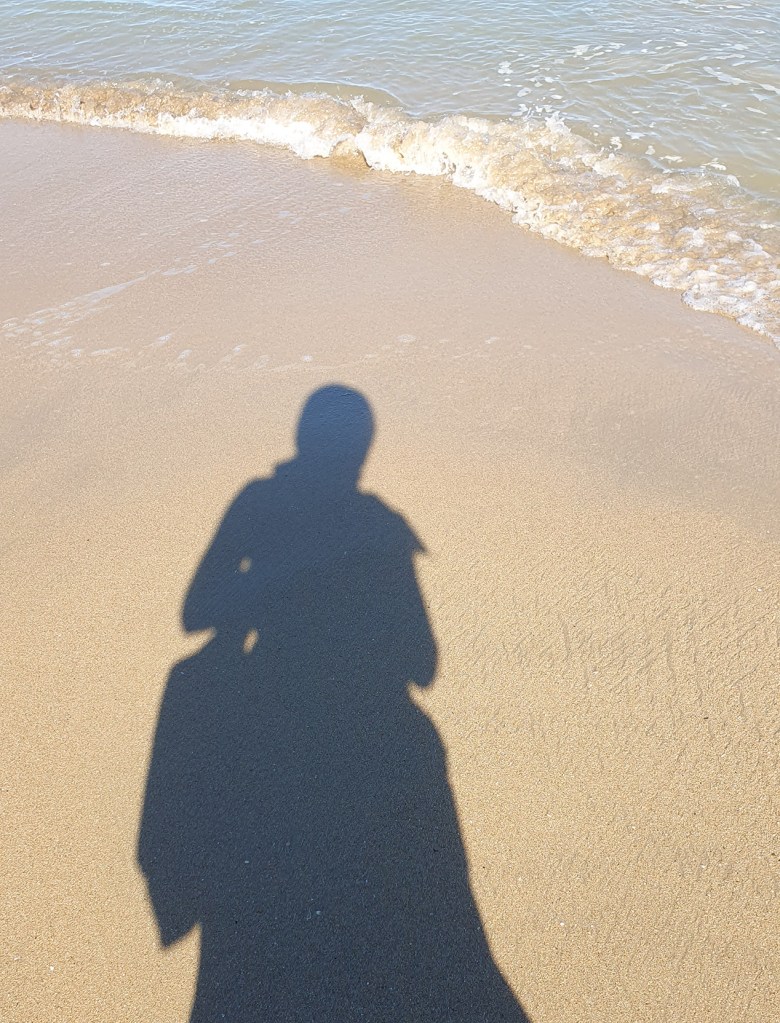
 Hulkuv loom