I have bounced around for a while now, absorbing and resisting ideas and expectations. Placing my self in various scenes to play them out. Rules becoming clear as they are brought into being by compromise.
Cultures are fun.
A little dip into Mozambique: a single white body, an exotic animal. A few tours back and forth over Europe: Spanish talkativeness and Eastern European silence.
The similar ways of urging a guest to eat.
I gather the contrasts and guard them in my bones.
I was raised in southern Estonia and northern Sweden; a lot of silence mixed with media imported from the USA (sarcasm, Britney Spears, blue jeans.) I’ve seen myself as a westerner, but maybe that has been unfounded; I’ve never really felt at home. What even is western culture?
…
For some reason I find it hard to get close to the other volunteers in Casa. We are all westerners; we’re from the States, Australia and Europe. Most of us are white. I thought our cultures would be similar, yet I find a lot of friction and discomfort in our interactions. It might be just me.
Sometimes I find my colleagues too tense, too insensitive, too rude.
The first phrase of a new acquaintance usually tends to be “where are you from?” It is barked at me straight out from nowhere. No “how are you?”, sometimes not even “what is your name?” or “hello.” No little moment of locking eyes and tuning into each others’ energy.
And this question of “being from” is a hard one for me and one to which I usually deny a straight answer and where I dance around and tease. My migrant friends all relate to the story of origin being complex; they accept me taking my time and setting up my own terms on which I give my answer.
Here I find very little tolerance for that. My evasiveness, whether joking or polite, usually creates a tension. As if I am creating a problem and I should know better than to make the answer my own.
Late one night I get properly told off by a drunk colleague who, it turns out, took offense when I didn’t want to tell him where I am from as our first interaction. He tells me I might as well lie for all it matters as long as I give an answer, any answer. I think him an idiot. Out of spite I meet his aggression with soft politeness until he tires, not taking the bait for conflict but deep belly-breaths.
Other times some colleagues take the liberty of answering in my place when they hear a new person ask me my origin. As if they want to save the newcomer from my vagueness. My subtle refusal is not seen and my overt refusal is taken as a personal offense. It is ridiculous and I would laugh at the repetition if I wasn’t afraid to cause even more upset.
I do not tell anyone that I think them rude for the way they insist on this question or expect the answer to align with some framework they’ve set up in their minds (yes but where are you from?)
“But how come you ask this?” I wonder. “Out of all the things?”
In other places I am used to being asked how I am, what my name is or if I am married.
The answer: usually something along the lines of “it’s normal”.
But it’s not.
There is something patronizing at work, I find. Something about not being able to meet another human on their terms but insisting on applying one’s own framework and feeling upset when the framework is denied. I deny the framework of “from”, I speak my truth which lies outside of expectations and so the white ones turn on me.
And me, I am frustrated by not being given the space to move.
…
In Mozambique I got used to being approached wherever I was; on the street, at the market, at whatever event. My skin got thick and I learned to not sway in my energy as easily. The intentions would vary but the interactions were mostly verbal. From someone just calling out “mulungo!” to gain a dart of my eye, to passers by saying hello and how are you without expecting more of an interaction, from people approaching me to talk, to ask for my number, to ask for money, to ask for dates, to all but propose; mostly the people approaching me would be men.
There were also the more upsetting cases, like someone reaching out and touching my stomach as I was walking the market, another time someone grabbing me hard by the wrist and not letting go.
In the beginning I would allow for way more than I felt comfortable with, hoping that the tension in my torso and my pulling away fast would clearly enough communicate that the hug I was giving was not one which I actually wanted to give.
That the hand I was shaking was not a touch in which I wanted to linger.
That the smile I was giving was not one that expressed happiness, but politeness.
I thought that as a guest, as a tourist, as female, as someone maybe representing white people or whatever, that it was almost my duty to accommodate for the interactions people approached me with.
That being “open” meant not having boundaries.
In Mozambique I learned to tune out and to loudly, clearly, flatly and un-apologetically say “no”.
“No, I don’t want to give you my number.”
“No, I don’t want to come with you.”
“No, I don’t want to talk to you.”
“No.”
No drama. No tension. No reason. No stress. Just a no.
And life would go on from there. To my surprise, almost no one was upset. Some people insisted and I kept to my “no”, equally calm and relaxed. Patience. The more comfortable I got, the more often a smile would accompany my “no”.
The thing is that people understand a hint. People read my body language and my energy better than in any other place I’d been. I felt seen. I felt that I was welcome to take my time and show up as I was, whatever emotional state I was in, however slow and riddled with faults my beginner Portuguese was.
Just that as white, I was an exotic animal. Normal rules did not always apply. I was the canvas of projection and prejudice. I would be hunted and it was exhausting. My clear “no” was being demanded. Sometimes several times. Yet my freedom to plainly refuse any and all interactions without stating a reason and without it causing upset felt unreal.
…
I remember gaining strength and endless freedom at a dance festival in Tofo. I was exhausted from the heat and from the week. Here, in this touristic surfing village, being white meant that you were not left alone. I remember avoiding going out, just knowing how much energy it would take for me to refuse all the attention directed at me. From vendors, from locals, from “beach boys” looking for potential surf-students and sugar mamas.
We were sitting at the hostel cafe, a group of us, all female, chatting about who knows what. One of the beach boys made his way to us. He was drunk and he wanted something, attention, to say hello or whatever. He held out his hand to me. I was sitting at the edge of the table and I took it and shook it and really just wished him to go so we could resume our chitchat. I thought I was being polite. I thought that he should understand, without us telling him, that we didn’t want to talk to him.
I thought that shaking any hand stretched out to me was expected of me.
After letting go he held his hand towards my friend on the opposite side of the table, a young poet from Eswatini.
And she didn’t take the hand.
She locked eyes with him and didn’t move. Didn’t respond. She didn’t say her name or where she is from. His hand hung empty in the air between them. He was drunk, swaying a little. She didn’t want to talk to him. She didn’t want to take his hand. And so she didn’t.
Eyes relentless, chin raised.
Finally his hand dropped and he just left. And I sat and I looked at her with amazement and inside I thought “wow, OK. This is an option.”
If I don’t want to talk, I don’t talk. If I don’t want to touch, I don’t touch. That’s it. I needed the reminder.
…
There are more culture chocks between me and other volunteers in Casablanca, many small things that are harder for me to put my finger on. Something about the things left unsaid.
It is something about… making remarks about problems rather than saying things straight out.
I think of the loud African households I’ve been part of where a dish left out of place would lead to a raised voice, loud and clear in the kitchen but with no ill intent. The house in Tangier where my own accidental muddy footprints on the kitchen floor were immediately pointed out to me, with smiles and laughter but also a tone that left no doubts about that I was expected to clean up and not repeat the same mistake. In this house voices would argue and discuss loudly any hour of the day, be it over a boiling pot or shouting between the floors well into the night. People taking space, asserting themselves, expressing.
Growing up, I never got to be this loud.
In this kitchen, while I’m doing my dishes someone might approach me and say something along the lines of:
“I hope the people that left this or that dish unwashed last night will clean it up soon.”
And I don’t understand what is expected of me. What should I answer even? Am I the one expected to tell the culprits to clean up? Or am I expected to form some sort of silent alliance with the person whispering to me, saying things to vaguely agree? What is the point of our conversation? The whole interaction is strange and alien.
At the school we get served delicious Moroccan meals twice a week. When we sit around the table everyone is quiet. Only the clinking of cutlery against plates and I have no idea what anyone is thinking.
Maybe what has spoiled me is always being seen as a cultural stranger and thus being approached without expectations.
In my western communities I feel that many people require so much time and so much consensus in order to feel safe to express themselves. And I can not offer the space because my frustration at the zig-zagging that happens before their sense of safety arrives drives my patience out the window.
…
Not to say that there aren’t things left unsaid in the African households or cultures I’ve visited. I’ve seen silent alliances and gazes evading; I’ve heard uncanny pauses and hushed voices around corners. Intrigues into which I am not let to enter. Subtle stories in the looks that I pick up on but don’t know what they mean.
I might ask, but if the answer is evasive I don’t dig.
And many things fly past me just because of language- and cultural barriers; unmet expectations or gestures that I am blind to because I lack the cultural blueprint.
Other times I am invited into the tangles: my Nigerian friend is in conflict with her brother back home since he sent his pregnant girlfriend to live with the family. He himself works in another city. She proved to be a proper nuisance for the older sister who lives at the house;
“She doesn’t even sweep. She is just being served everything,” my friend says and adds that she doesn’t believe her to be pregnant to begin with. And now the brother wants to throw the older sister out of the house because she is telling off his girlfriend, and he can do that as he is the son.
My hands are limp in my lap. There are so many assumptions and cultural variations which to me are strange and unheard of. I just sit and swallow my friend’s story without any insight to offer or the slightest idea of what my own take of the situation is.
…
I add more cultural patches to my hide and more aces up my sleeves. I learn more ways to be polite; do not smell the food you are offered in Maputo and do not touch the chair with your feet. But the more pieces and patches that I gather into my self, the more are left to wait at the thresholds; these sides of me have names now.
Sometimes when I find myself in loud contexts where everyone seems to have an opinion on every detail, I long for the silence and letting things be left un-commented.
Sometimes when I find myself in silent contexts where the others’ moods are hidden, I long for the loud spaces; to blabber about nothing or to be bluntly asked personal questions and linger in overt self-expression.
…
When I look deeper into my self I find expectations of belonging better in western culture. But why? What is western culture, is there even such a thing?
How come only white people ask me where I am from with such relentlessness? And why are they upset when they don’t like my answer? On the other hand they usually don’t give a shit about if I am married or if I have children.
…
Every culture considers itself the neutral point against which the rest is measured. And it makes sense for a person to lack the frame of reference if they have never met anyone who differs from their expectations. It’s just impossible to imagine a different core value or mannerism as they hide in plain sight.
But there are more layers at work here; decennia of exported American brands and quotes. Before that, centuries of colonialism where many cultures were actively repressed by a few. We’re living in the tracks of these histories. Maybe this is why people from some cultures find it harder to accept views of the world that fundamentally differ from their own; their parents and grandparents have not had to live through being violently forced to accept not only the validity but also the superiority of a fundamentally different world view.
But no culture is neutral. It’s just another variation, just other strange ways of doing things. No one is innocent and everyone is weird. The West is not a place and white is not a color; they are both ideas.
Maybe it is because I empathize with the stories of repression that I find more tolerance for the bluntness and rudeness of Africans than that of the Europeans and the Americans. Because I still see these power structures play out through the privilege that I gain as a white person.
When I get the headspace to remove myself from the feelings of upset in a culture clash, I think to myself:
“Oh. So this is what your culture allows you to become?”
I try my best not to patronize and to forgive bluntness and rudeness. I know I cause double the upset: both when I refuse to say where I’m from as well as whether I am married.
…
(This story told in pictures.)
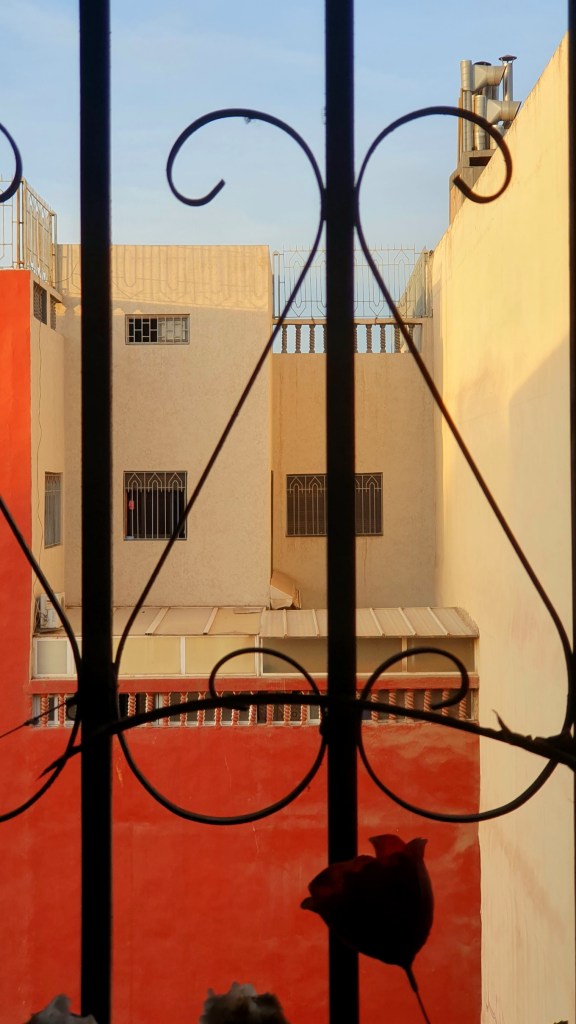
 Hulkuv loom