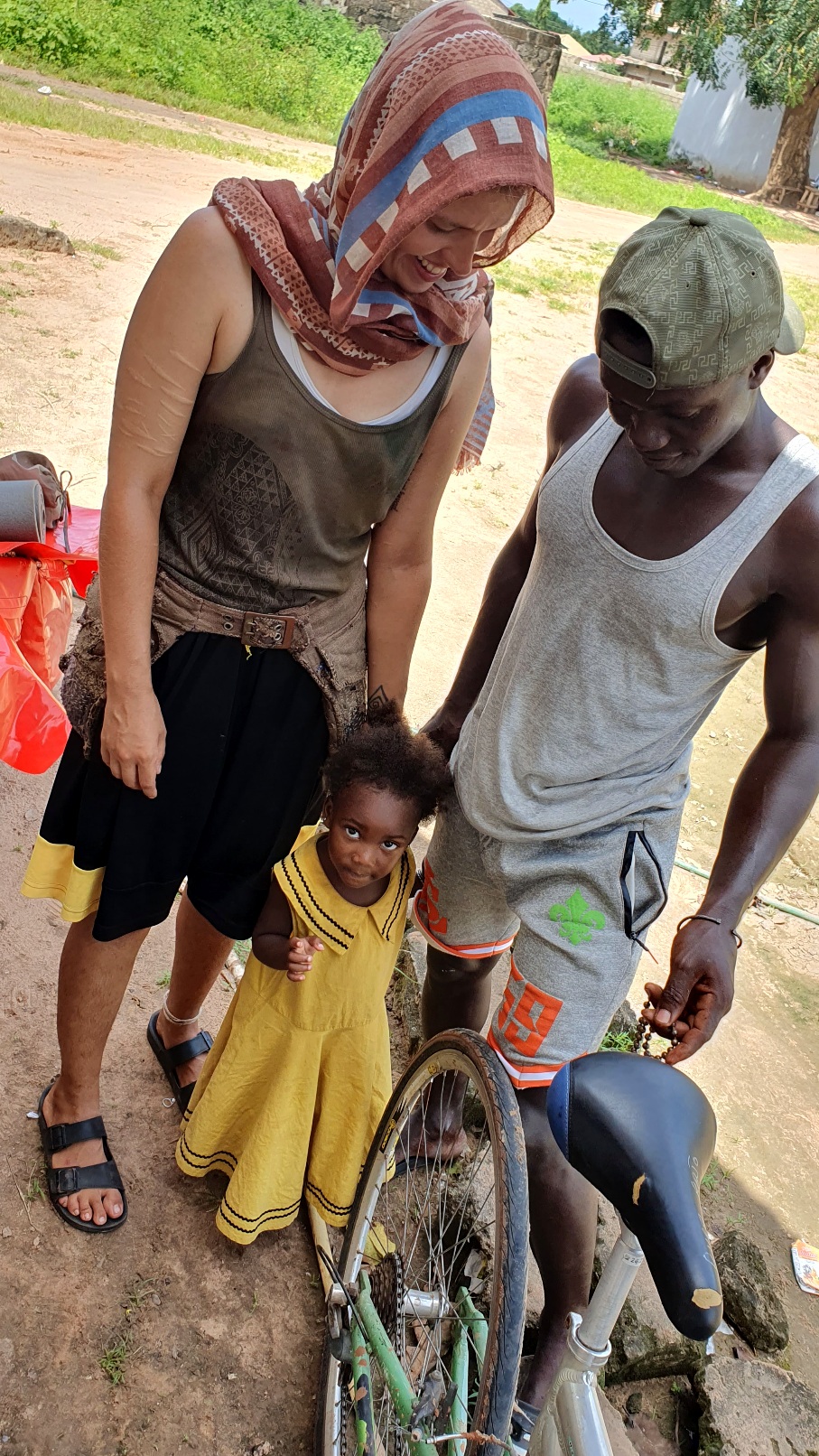
I have to set an alarm in order to catch her in her daily routine. By the time I reach her house around 08, she has been up for a long time. She has finished cleaning the house and sent off her sister’s children to school. She has washed and dressed her two year-old and the baby. She is just sweeping out the last dust and arranging the pile of children’s shoes in the salon when I arrive. She smiles wide, puts a veil on herself and the two-year old, and then we’re ready to go to the market.
“I never know what I will cook,” she tells me. “I just look at which prices are good that day.” The baby is tied to her back with a fabric and covered with another one. The two year-old is holding my hand.
The market is just a few stands by the road with women selling vegetables and fish. She fills up a small basket and bargains for the fish. From the little shop she buys a few cups of rice; the American variety, the cheap one. Besides a few cubes of stock and a little bag of cooking oil. After that we’re all set.
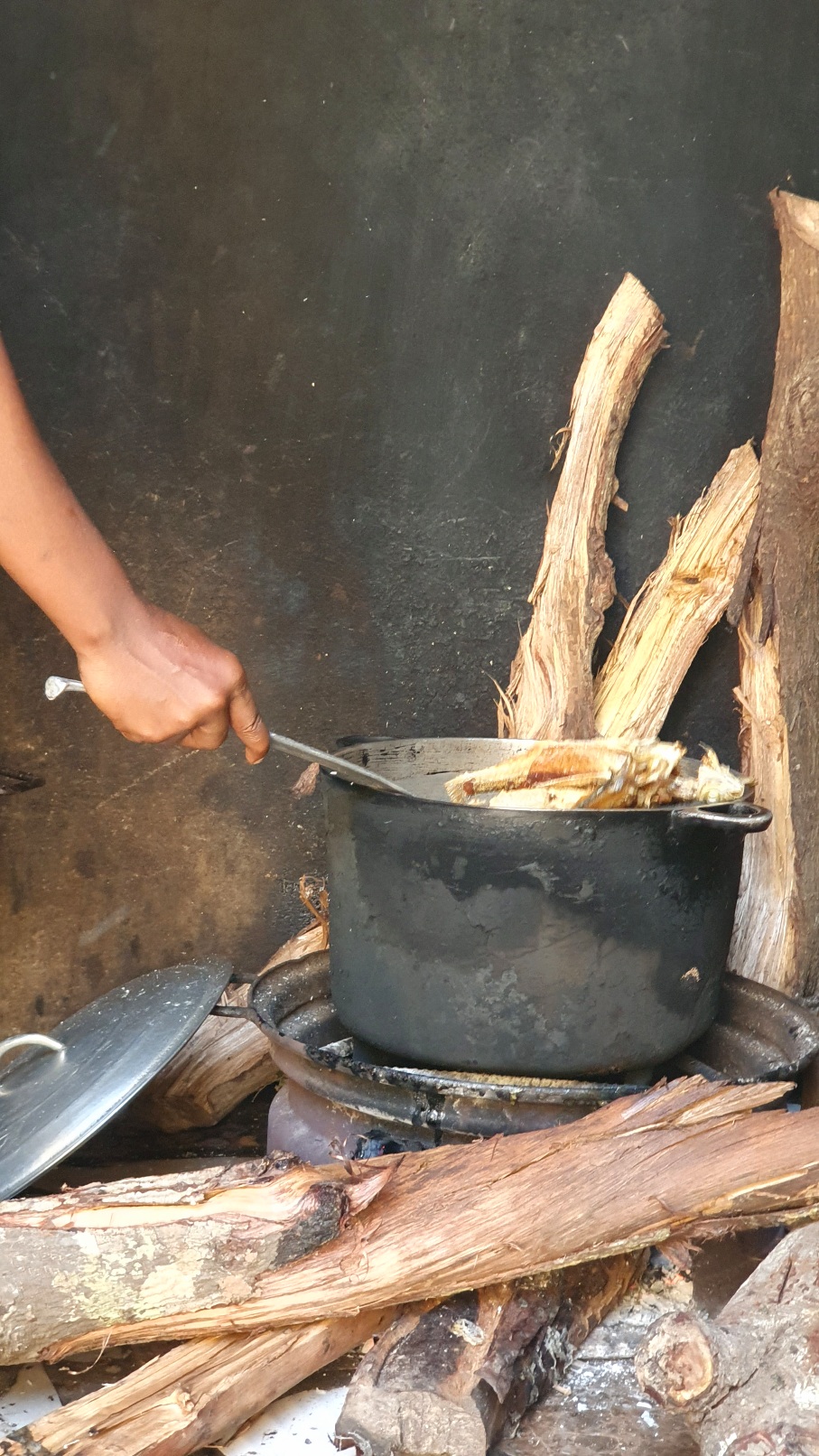
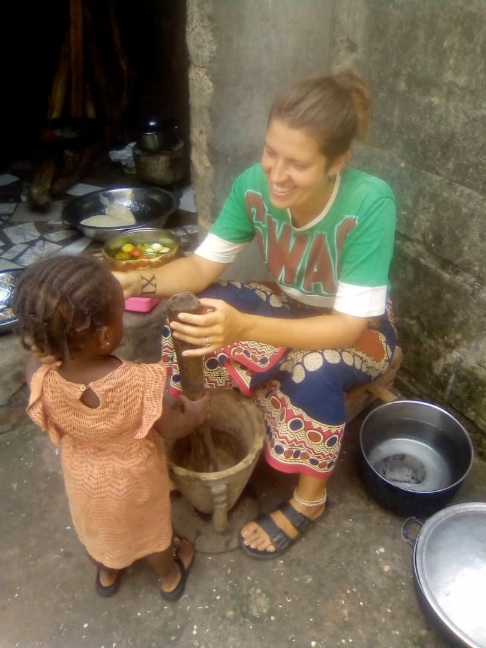
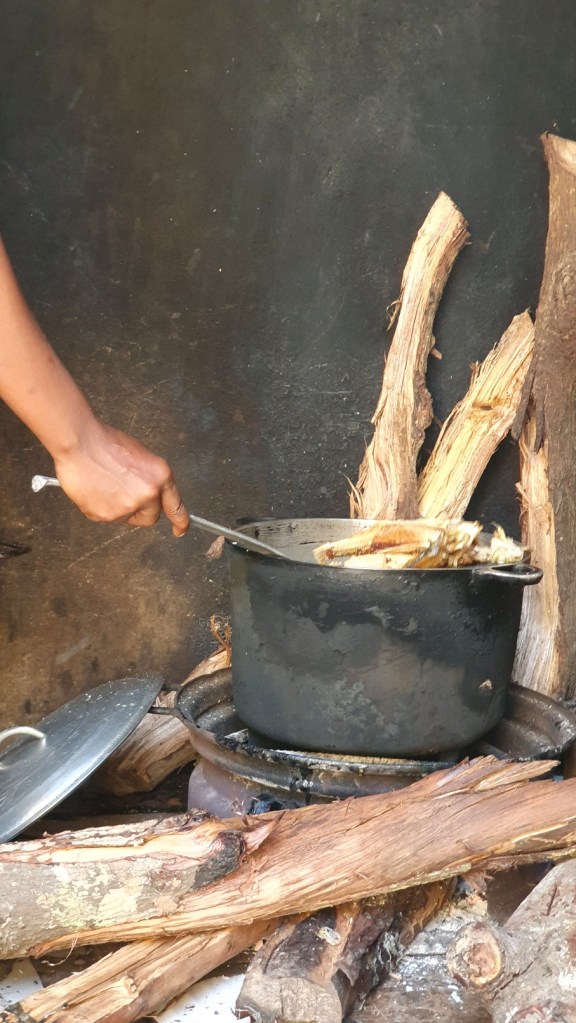
She cooks in the back yard. A small enclosed space is for the toilet and washing, another for the fire. The dishes are done under the open sky. I never get to see where they fetch the water. She has a gas tube, but uses the cheaper firewood to save the gas. We sit on the step to the kitchen-shed. She lets me peel the onions, pound the garlic and the leek, but not much else. She also lets me pick the tiny rocks out of the rice, but she always verifies after. The baby whines from time to time on her back; she is fussy, can not be put down or she will cry. It takes not even twenty seconds of me holding her until she wails; no, she has to stay with her Mom. The big sister watches with big eyes and is somehow both timid and pragmatic when she comes over to me and places her tiny hand on the enormous pestle to help me pound the garlic.
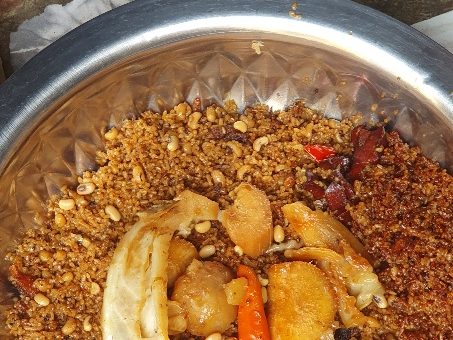
I come to cook yassa, thiebudjenn, bean-rice. Every day begins early and by the time I get back it’s already late and I am tired. And yet I am not the one carrying a baby on my back or any of the responsibilities.
But she babbles away happily, flatters me and fusses. She makes me breakfast even though she doesn’t eat any herself. When her sister’s children come home from school, she fusses over them, too.
“You’re gonna say ‘look Mom, look Dad, this is me cooking in Africa!’” she laughs as she adds the fried fish to the sauce. “This is Inga’s cooking!”
“Nooo, no no no!” I protest. “This is your cooking, I did not make this! I am the student!” But she only giggles.
“Yeeees!” We are about the same age. In many ways she seems both much younger and much older than me.
By the third time, the baby can bear to be in my arms for a moment and she gives her to me in order to take a shower. The food is finished, the dishes are washed and the older kids are not home from school yet. I walk and bop and turn the whining baby this way and that, balancing on what is not yet a full blown wail, but not far from it, either. In my mind I am stressed and thinking that she’s only given me the baby to challenge me in some strange way, to see if I am a “real” woman or whatever. Until she emerges from the bathroom, relaxed and refreshed. Her voice is different when she takes the baby, as if she’s had the time to breathe out.
“Thank you,” she says as she takes her. “It’s before four and I’ve had time to shower, and we have cleaned everything.” Not until that moment do I feel as if I’ve actually contributed to anything; it hits me that even having ten minutes of free time as a mother running a household with young children might not be something that arrives every day. And I am happy to feel as if I’ve contributed, however little, instead of being a guest and another person she has to care for.
The food is waiting in the pots.
“Should I dish the rice?” I ask her. She pauses.
“Ummm,” she says. I should have known better.
“Are you sure you can do it? It’s hard, you know.” She looks so doubtful and I smile. I decide to poke her just a little bit more.
“I can do it, no worries!” I say. “You don’t think I will do it well?”
“I think I should do it,” she says. “You look tired, you should take some rest.” I am both amused and a little upset at the lack of trust and her unwillingness to say “no” directly, but I don’t challenge her further. It is her kitchen.
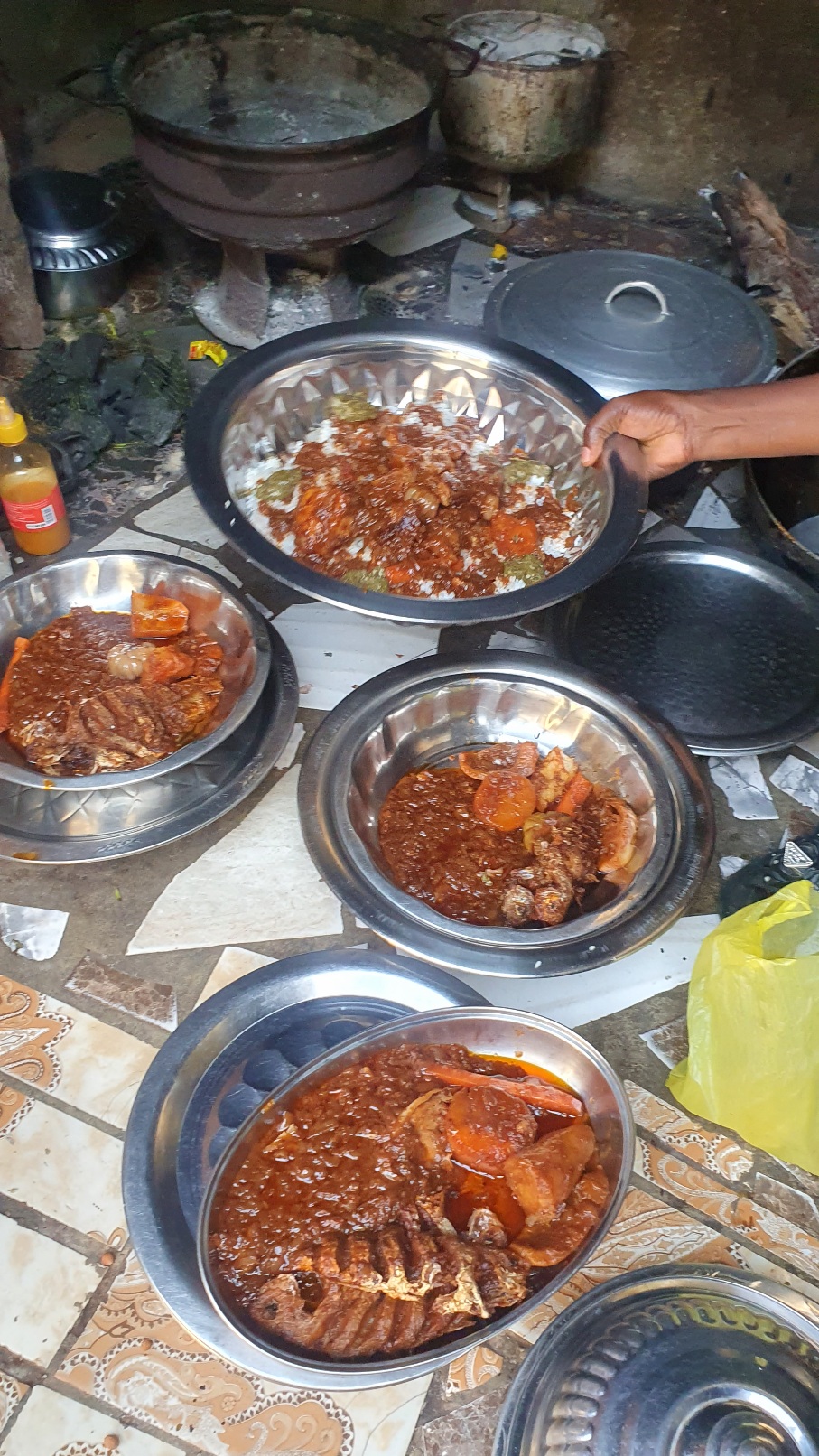
She stirs the rice to make it fluffy before she portions it. She pauses to think. She blesses the food, mumbles a soft “bismillah” over every spoonful of rice or before adding any new ingredients to the pot. Adding another bit of compassion for the people who will eat it.
The rice gets portioned, the fish chosen according to the size of each dish – the best pieces to her husband, her sister’s husband, then me and my friend – the sauce gets drizzled over the rice or set aside in separate dishes for those who will eat later. The “oil lovers” (the neighbors) get extra oil. The “snail lovers” (the two year-old) get extra snail. Slices of fresh tomato and cucumber are set as garnish.
In the week I am there, I spend every other day with her. I swing by her house in the morning on the day I leave. I haven’t told her when I’m going, as I haven’t known it myself. She immediately gets into a fuss when she sees me in my shorts and with bike all packed.
“You are late- what? You’re leaving? I wanted to buy a fabric for you! No…!” She hurries inside, oblivious to my calls that it’s OK and she doesn’t have to give me anything. Instead she calls me into the bedroom. She is rummaging around a pile of clothes as I follow; still pleading with my hands and voice to not give me anything, my luggage is full, thank you for all the time and please, a hug will do. She is deaf to all this.
“Is this good? Do you like it? Or do you want another one?” She holds out a fabric with black and purple pattern and plastic pearls attached to the sides.
“Take this one too,” she urges and presses a leopard-patterned head cap into my hands. “You can wear it when you go to the beach. Oh when will you come back?”
I obediently pack the gifts into my baggage and hurry to say my thanks before I get pulled into a meal and another day of cooking. We take selfies together. The two year-old wanders off, picking up on that something is up, avoiding the good-byes. Finally I tear myself free, take my bike and wave. They stay like that, on the porch. She waves and smiles her wide, sunny smile. The two year-old hides her face in her skirts.
…



 Hulkuv loom